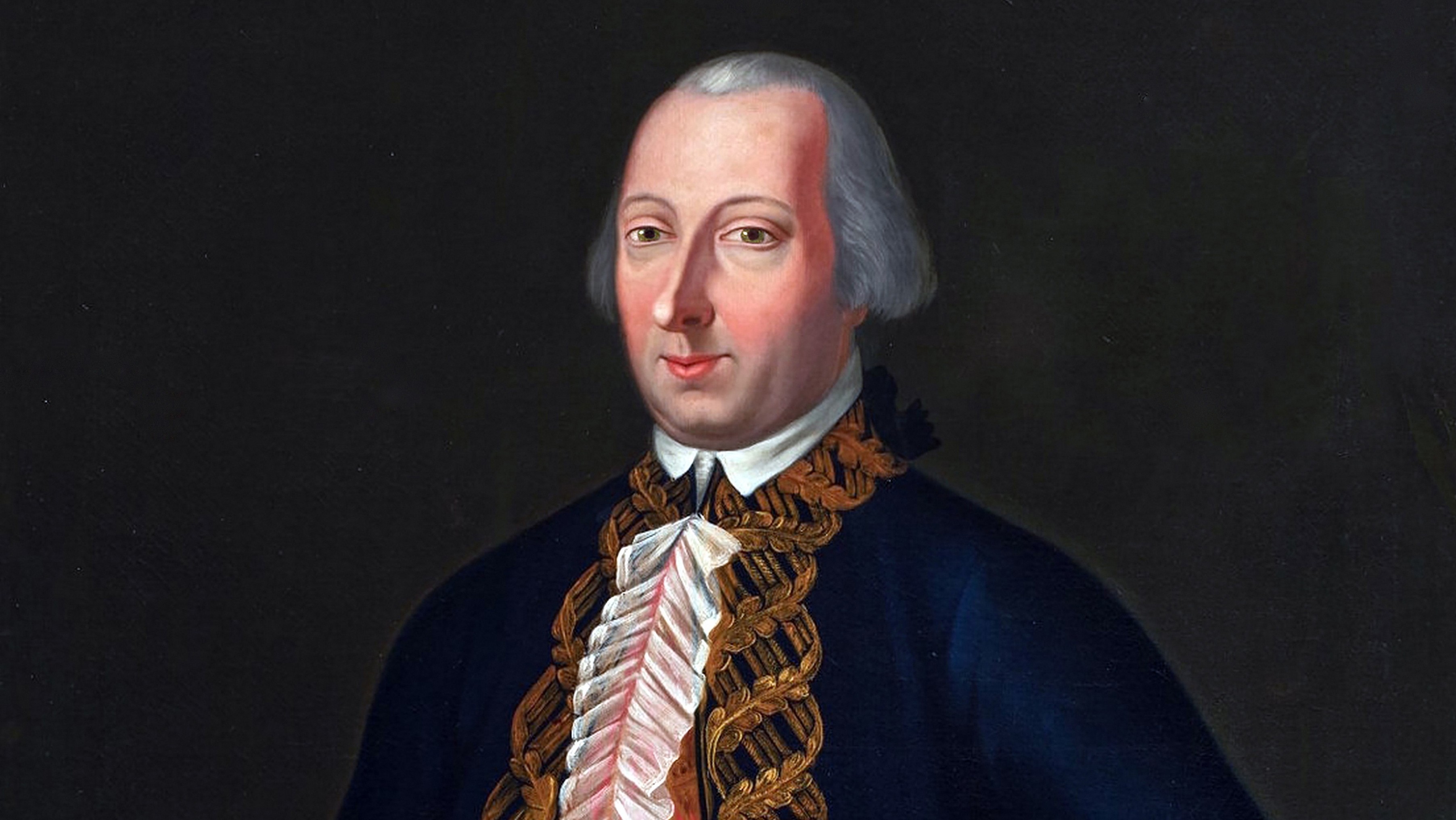
The Hispanic Founder
One of the biggest Independence Day celebrations outside of North America takes place in Macharaviaya, Spain, a mountain town, population 500, in the southern province of Málaga. Thousands of people attend the festivities, during which villagers wearing 18th-century period costumes reenact the 1781 Siege of Pensacola, a turning point in the American Revolution. The flag of the United States features prominently. To the tune of “The Star-Spangled Banner,” an actor delivers a dramatic reading, in Spanish, of Francis Scott Key’s poem “Defence of Fort M’Henry,” on which the song was based. The evening ends with fireworks.Macharaviaya observes the independence of the United States because a hero of the American Revolution, Bernardo de Gálvez, was born there. Gálvez was the Spanish governor of Louisiana whose troops, including Spaniards, Spanish Americans, American Indians, and Black people, both enslaved and free, defeated the British in Florida. He had a hand in securing Spanish silver from Havana that George Washington used to pay and provision the troops fighting for him in the Battle of Yorktown. He also helped draft the Treaty of Paris that ended the war. Washington later recognized that Gálvez had been crucial to the revolution’s success. After the war, Spain claimed Florida and held on to it until the 1819 Adams-Onís Treaty, which made it a territory of the United States.[Gal Beckerman: The two kinds of American patriotism]Macharaviaya’s Independence Day celebrations may sound like nothing more than a funny bit of trivia—quirky festivities in honor of a mostly forgotten historical figure. But they also serve as a rejoinder to the arguments now common on the right that America’s Anglo-Saxon heritage is what ties its people together. When President Trump welcomed King Charles III and Queen Camilla to the White House in April, he lauded the “Anglo-Saxon courage” of the revolting British colonists and said that the culture, character, and creed of a “small but mighty