America’s data center backlash is bipartisan — can it stay that way?
Why this matters: environmental and climate reporting with long-term consequences.
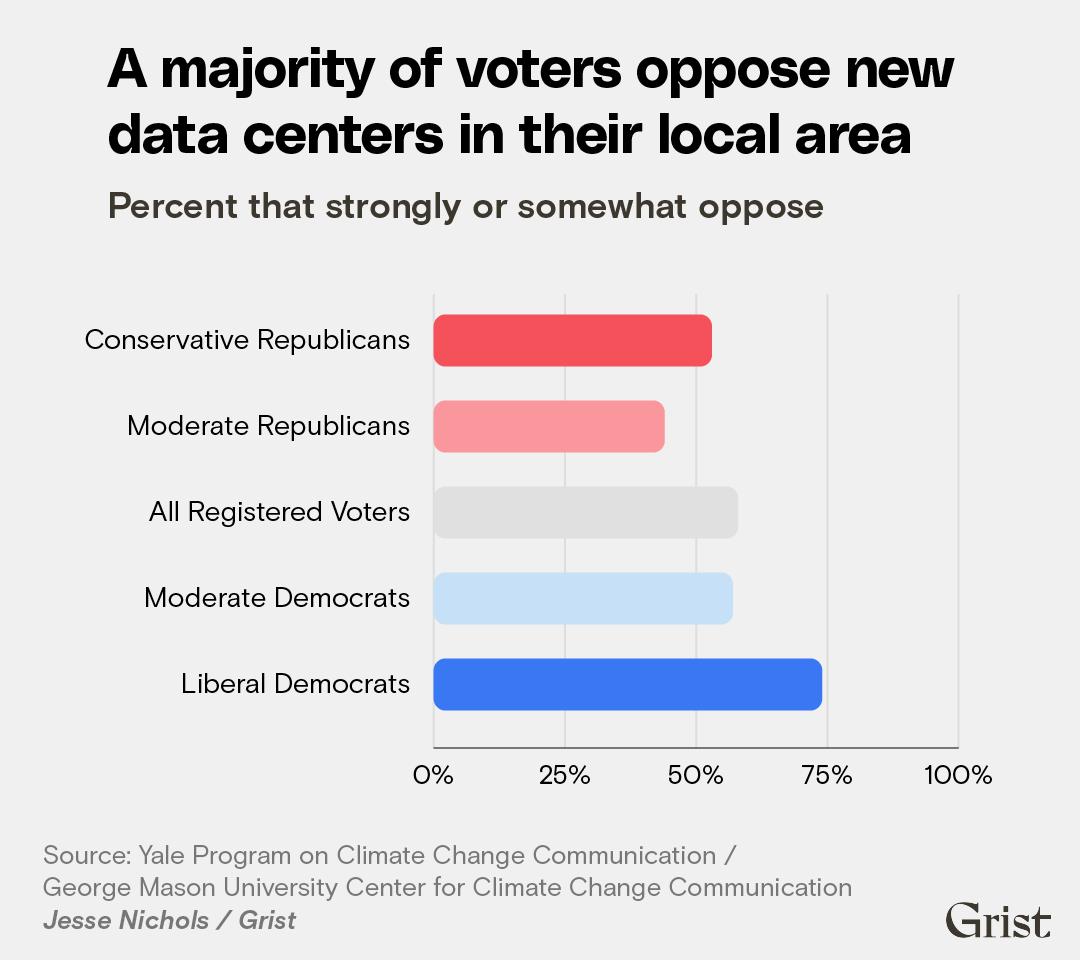
This month, Texas Governor Greg Abbott, a staunch supporter of President Donald Trump, unveiled a set of sweeping recommendations to rein in rampant data center development, urging Texas lawmakers to aggressively regulate the tech industry in a state that has a reputation for welcoming new development with open arms. At the same time, New York Governor Kathy Hochul, the Democratic leader of a state known for regulatory restrictions, has declined to say whether she will sign a first-of-its-kind bill passed by her state legislature imposing a one-year moratorium on large-scale data centers. Welcome to the weird world of data center politics, where the usual partisan scripts around energy and natural resources don’t apply — yet. Facilities housing massive amounts of computing equipment are springing up across the U.S. to quench the tech industry’s unslakable thirst for artificial intelligence. These AI-ready data centers, which consume more energy than the traditional cloud-computing centers that already exist to host and store various aspects of modern digital life, have become a political flashpoint at lightning speed — reshaping local and state politics from coast to coast as Americans grapple with high energy costs, natural resource depletion, and the repercussions of megadevelopment. In an era when political polarization is near record highs, data center backlash represents a rare area of consensus on both sides of the political aisle. Some 70 percent of Americans oppose local construction of AI data centers — 75 percent of Democrats and 63 percent of Republicans, according to polling from Gallup. Dig a little deeper into additional survey data, and the politics of data centers gets even more surprising. There are more conservative Republicans (53 percent) who oppose data centers in their local area than moderate Republicans (44 percent) — meaning that staunch conservatives are actually nearer to Democrats in their opposition. “I’m not sure I’ve ever s