Emma Baker on ADHD
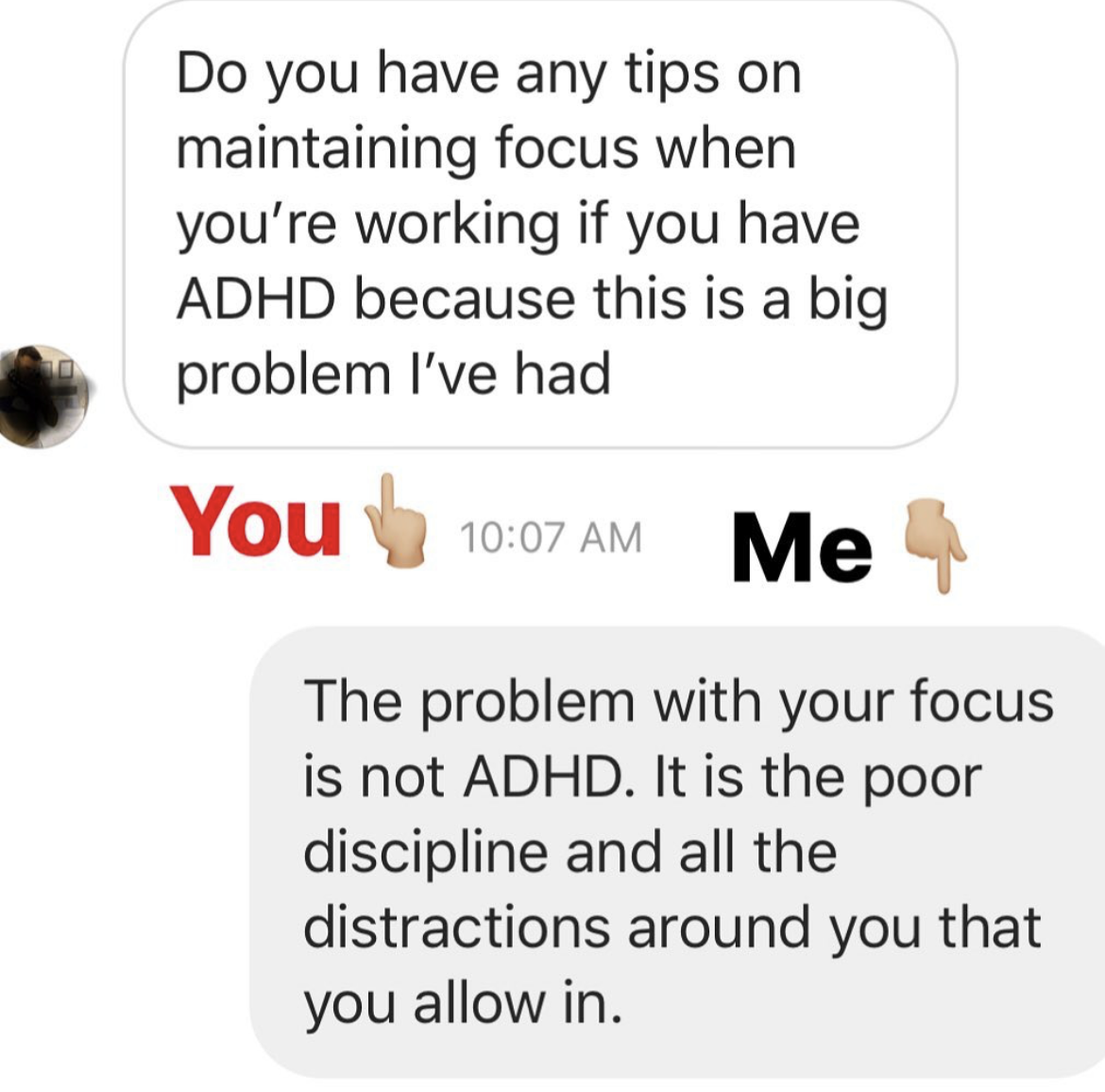
A good article on ADHD by Emma Baker of Tree Number Three from Inkhaven. ADHD can be uniquely debilitating and also complicated to effectively medicate, and this article changed my perspective on how bad it is. In this post I’ve included some personal commentary from my own experiences on Emma’s article. On how ADHD is actually terrible I often observe ADHD romanticized as a quirky harmless disorder or failure of will, but this hurts people with ADHD since thinking it’s good or merely a willpower issue discourage those with the disorder from seeking effective treatment. Meanwhile the disorder can seriously impair life outcomes.I’ve recently realized ADHD is much worse than the average person assumes. It’s worse than I assumed. I think treating a disclosure of ADHD with more gravity — not mythologization, simply weight — might make life better for those with ADHD and those without it.I wholeheartedly support the reduction of stigma for those with mental illness, and believe that the mentally ill benefit from public awareness of their conditions. It is also fun when people who know what they’re talking about joke about it.However.My own experience inclines me to agree with Dr. Russell Barkley, who famously called ADHD “degenerative diabetes of the brain.” It is not Fidgeting in Your Seat Disorder. We are not indigo children; we are not Bart Simpson. The never-ending parade of famous people talking about their ADHD seems to imply that there is an equal chance for those with and without ADHD to succeed in most domains. Untreated, there is not.In addition to ADHD being reduced to something simply amusing and not actually deeply impairing, like with the Bart Simpson comparison, I think the notion that ADHD has some set of advantages is also quite harmful. While sometimes successful people say that their ADHD helped them avoid a traditional career path and motivated them to pursue something unique, we 1) have no counterfactual to prove they wouldn’t be successful with treat