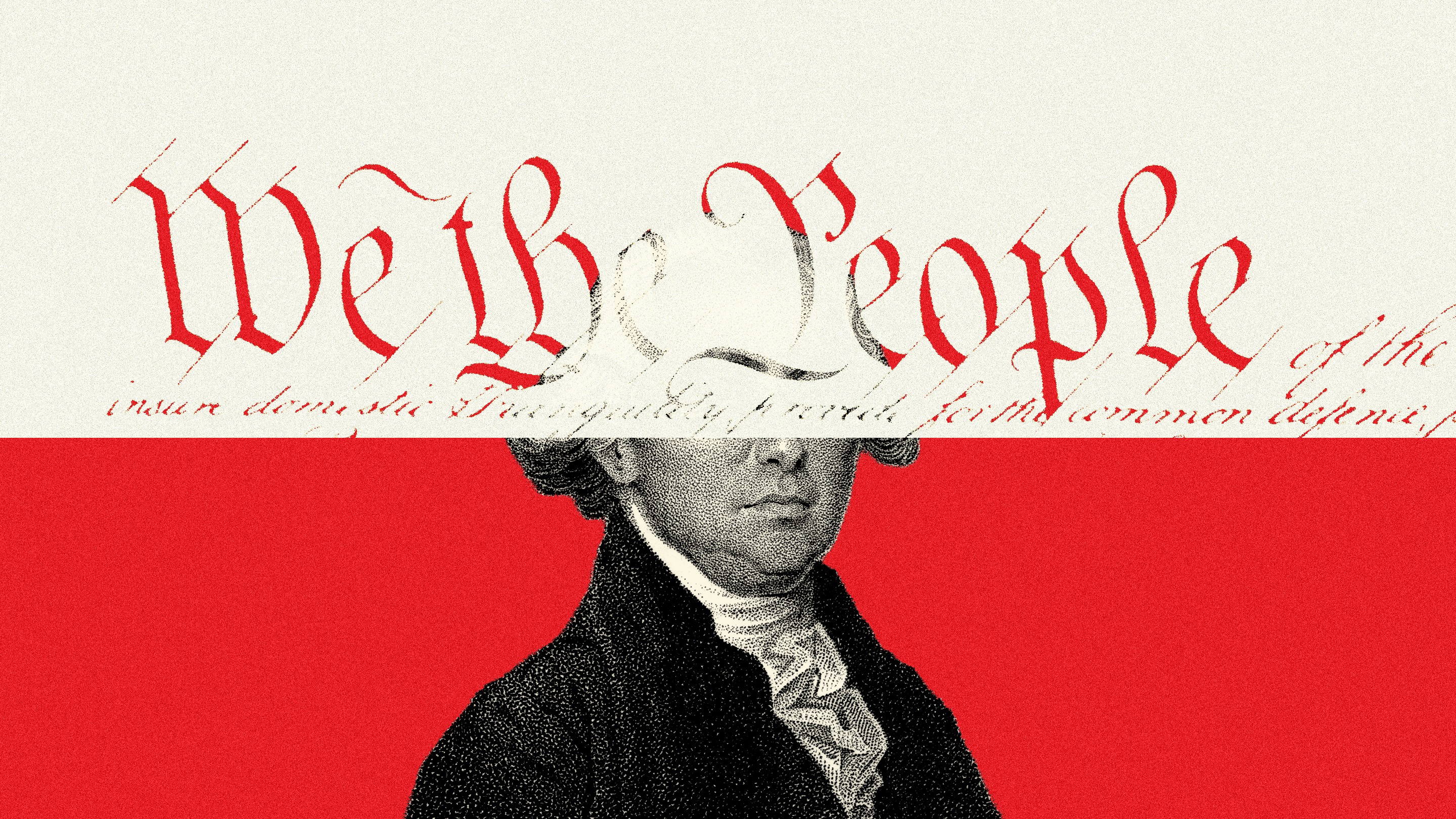
The Forgotten Founding Father
Early one evening in August 1798, a sitting justice of the Supreme Court named James Wilson died in a sparsely furnished boarding room on the second floor of a North Carolina tavern. He had been holed up there for nearly a year to avoid creditors, to whom he owed unspeakable debts from land speculation. Delirious and destitute, he died from malarial fever, which burned through the Carolinas every summer.There was no public announcement of Wilson’s death. It was an ignominious end to a man who was not only a Supreme Court justice but also arguably the most influential, prescient, and democratic drafter of the Constitution, one of only six men to sign both that document and the Declaration of Independence.The other Founders had acolytes who promoted their legacy and preserved their records, but Wilson died a pariah, which kept him out of history books as the conventional narrative of the founding took shape. Even today, his headstone in Philadelphia lists the wrong date for his death. Recovering his role in creating America is essential if the nation is to recommit itself to the ideals of democracy and popular sovereignty, which he championed with greater force than any of his contemporaries did.[Danielle Allen: What the 18th century can teach the 21st]Wilson’s peers had no doubt about his importance. “No man is more clear, copious, and comprehensive than Mr. Wilson,” said William Pierce, a delegate to the Constitutional Convention from Georgia. According to Benjamin Rush, who signed the Declaration of Independence alongside Wilson, “his mind, while he spoke, was one blaze of light.” He was “as able, candid, and honest a member as any in convention,” George Washington wrote. This article has been adapted from Wegman’s new book. Wilson first arrived in Philadelphia as a poor 23-year-old immigrant from Scotland. Two decades later, after becoming one of the most celebrated lawyers in America, he attended the 1787 Constitutional Convention in the same city. Wilson spoke m