After a civil rights complaint, Chicago built the nation’s largest air monitoring network
Why this matters: environmental and climate reporting with long-term consequences.
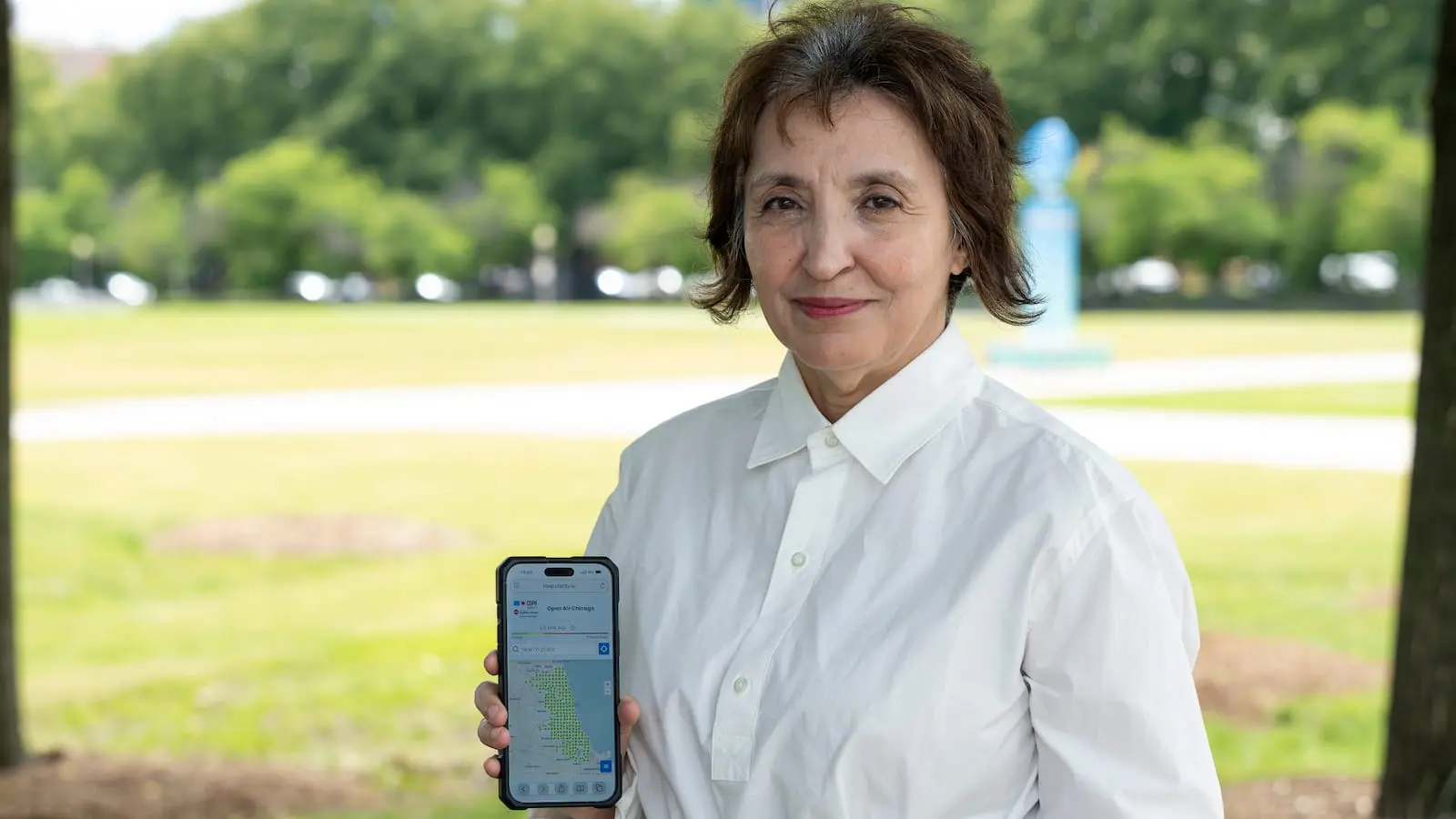
Serap Erdal stopped at a light pole in Chicago’s Grant Park, pulled out her phone, and began pinching at the screen. Behind her, towering skyscrapers cut into a sunny blue sky as she scanned her palm-sized map of the city. The researcher barely noticed the hum of city buses, cars, and cyclists buzzing around her in the city’s busy downtown. She was working out what was in the cool summer air. Fixed to the pole above her was one of the city’s new solar-powered air quality monitors. The tracker, encased in a metallic silver shell about the size of a tissue box, is part of the nation’s largest community air quality monitoring network. Today, the network has 277 air monitors across Chicago collecting air pollution data from every ward and community area, with an increased concentration in already-overburdened neighborhoods. A bright green dot flashed on Erdal’s phone. She smiled. “Currently, the air quality index at this location is 31,” said Erdal, a professor of environment and occupational health sciences at the University of Illinois Chicago. The reading puts the air quality in the city’s public park in the Environmental Protection Agency’s safest category, meaning it poses little to no risk to public health. “Because we have a clear day and it’s breezy, concentrations across the city are quite uniform,” she added. On that day in June, almost all of the city’s monitors were green, except for one on the far South Side, where legacy industrial facilities and freight traffic pump emissions into nearby Black and Latino neighborhoods. In the coming years, the monitoring system is expected to elucidate the dramatically uneven air quality in different neighborhoods, even on clear and breezy days. Serap Erdal shows the Open Air Chicago map on her phone. Erdal helped launch the project last fall. Tyler Pasciak LaRiviere / Chicago Sun-Times The project, called Open Air Chicago, went live last fall and is part of a five-year project to collect hyperlocal air qualit