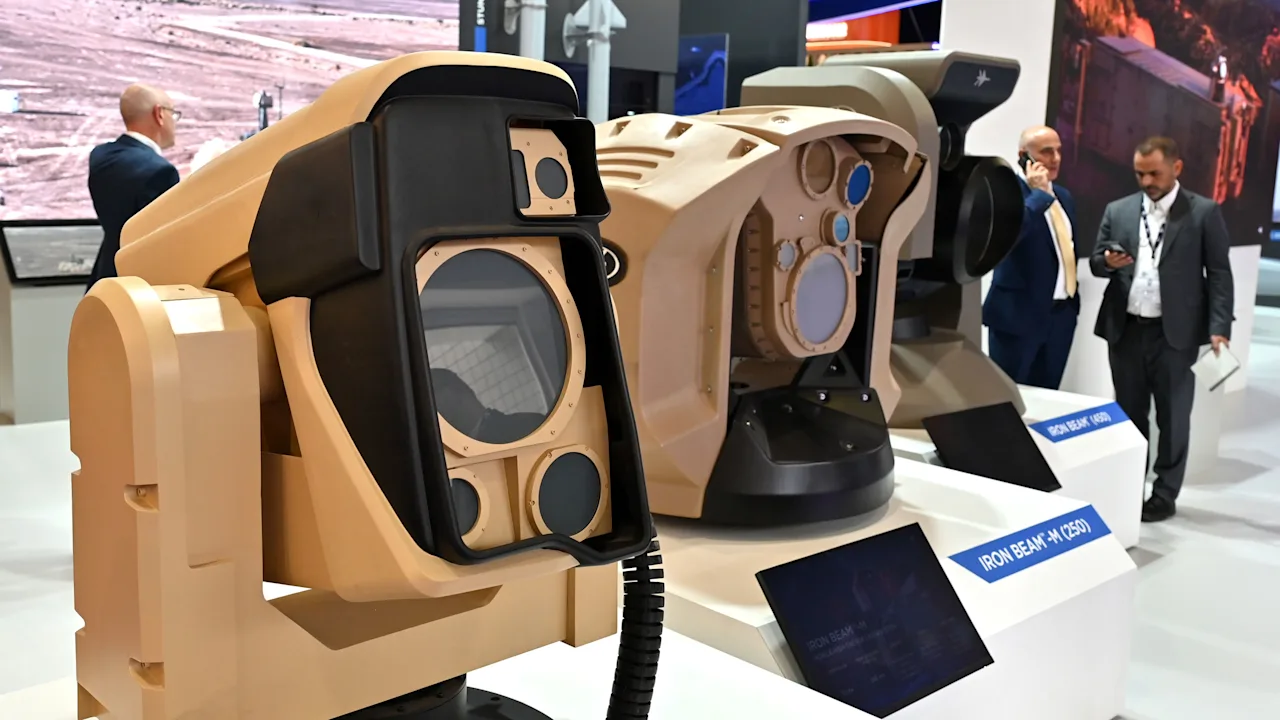
The laser weapons race enters its industrial era
This article is republished with permission from Laser Wars, a newsletter about military laser weapons and other futuristic defense technology. On April 30, the Financial Times reported Israel had sent a version of its 100 KW Iron Beam high-energy laser weapon to the United Arab Emirates (UAE) to help Abu Dhabi fend off hundreds of missiles and drones fired by Iran since the beginning of the U.S. military’s Operation Epic Fury. The FT notes the deployment is one of the first examples of major defense cooperation between the two countries since the 2020 Abraham Accords—a display of “the value of being Israel’s friend,” according to a regional official. There is little information publicly available on Iron Beam’s performance in the UAE. But on May 7, Defence Blog reported a Chinese-made vehicle-mounted laser weapon had been spotted at Dubai International Airport. Tentatively identified as consistent with the Guangjian-21A system first displayed at the Zhuhai Airshow in 2022, there was no announcement of the system’s export from Beijing or an acknowledgement of its arrival in the country from Abu Dhabi. The sudden appearance of laser weapons in the UAE isn’t a total surprise: The government has previously expressed interest in procuring foreign directed- energy systems through both direct sales and strategic partnerships and even pushed to develop its own indigenous research and development ecosystem. But neither story mentioned that the Abu Dhabi was already in the process of acquiring an American laser weapon system as well. A notification to Congress published on April 15 revealed that the UAE had asked to buy 10 counter-drone Fixed Site-Low, Slow, Small Unmanned Aircraft Integrated Defeat Systems (FS-LIDS) from the U.S. Defense Department for $2.1 billion—and, notably, the system’s command and control (C2) architecture was being specifically scoped to integrate an unnamed laser weapon “being purchased” by Abu Dhabi through direct commercial sales. Three lase