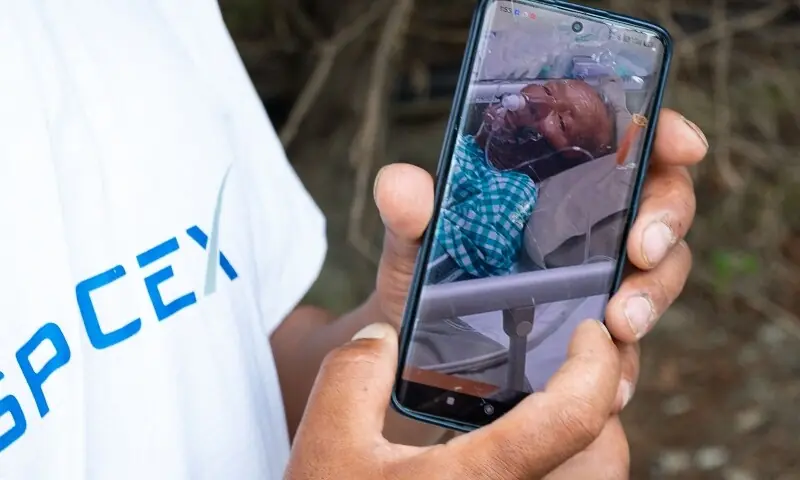
'I thought I would perish': Nepali mountaineer who survived nearly a week on Everest recounts ordeal
Why this matters: local context for readers following news across Pakistan and the region.
A Nepali mountaineer who survived nearly a week on Mount Everest said he “chewed ice” to stay alive, as he recovered in a hospital after a miraculous rescue that stunned the climbing community. Dawa Sherpa, 57, disappeared in brutal conditions on the upper slopes of the world’s tallest mountain on May 30 during one of the final climbs of the spring season. With few climbers still on the peak and his oxygen exhausted, relatives had given up hope and begun ritual mourning prayers, believing he had died on the mountain. “I didn’t think I would be alive,” he told BBC Nepali on Friday from his hospital bed. “I thought I would perish this way. I didn’t get lost. As the oxygen ran out, I fell behind. After the oxygen finished, I couldn’t walk.” Left stranded in freezing temperatures near Everest’s “death zone”, where oxygen levels are critically low, Dawa Sherpa said he survived for days with almost no food or water. “I didn’t eat anything for the first two days. Then I began chewing ice. It hurt my teeth. I chewed the ice hard,” he said. He survived on a few chocolates and snacks he found in his pockets. “I soaked them in water and had them,” he said. Dawa Sherpa, also known as “Hillary” after legendary climber Edmund Hillary, had told others after his rescue that at one point he fell into a crevasse before managing to climb out. Jubilation and anger “Stepping on the snow, I stood up and looked above … It felt I could get out from there,” he said. “I then looked for ropes and found one. Then I held on to it and walked … eventually I came down.” He said he walked day and night towards base camp until finally encountering people almost a week later. He was found crawling towards the base camp on the morning of June 4 by the Sagarmatha Pollution Control Committee (SPCC), a Nepali team that helps set routes on Everest and clean up waste left behind. “Boys from SPCC were going up to collect the waste. I met them. They carried me down.” He was flown to Kathmandu for treatment f