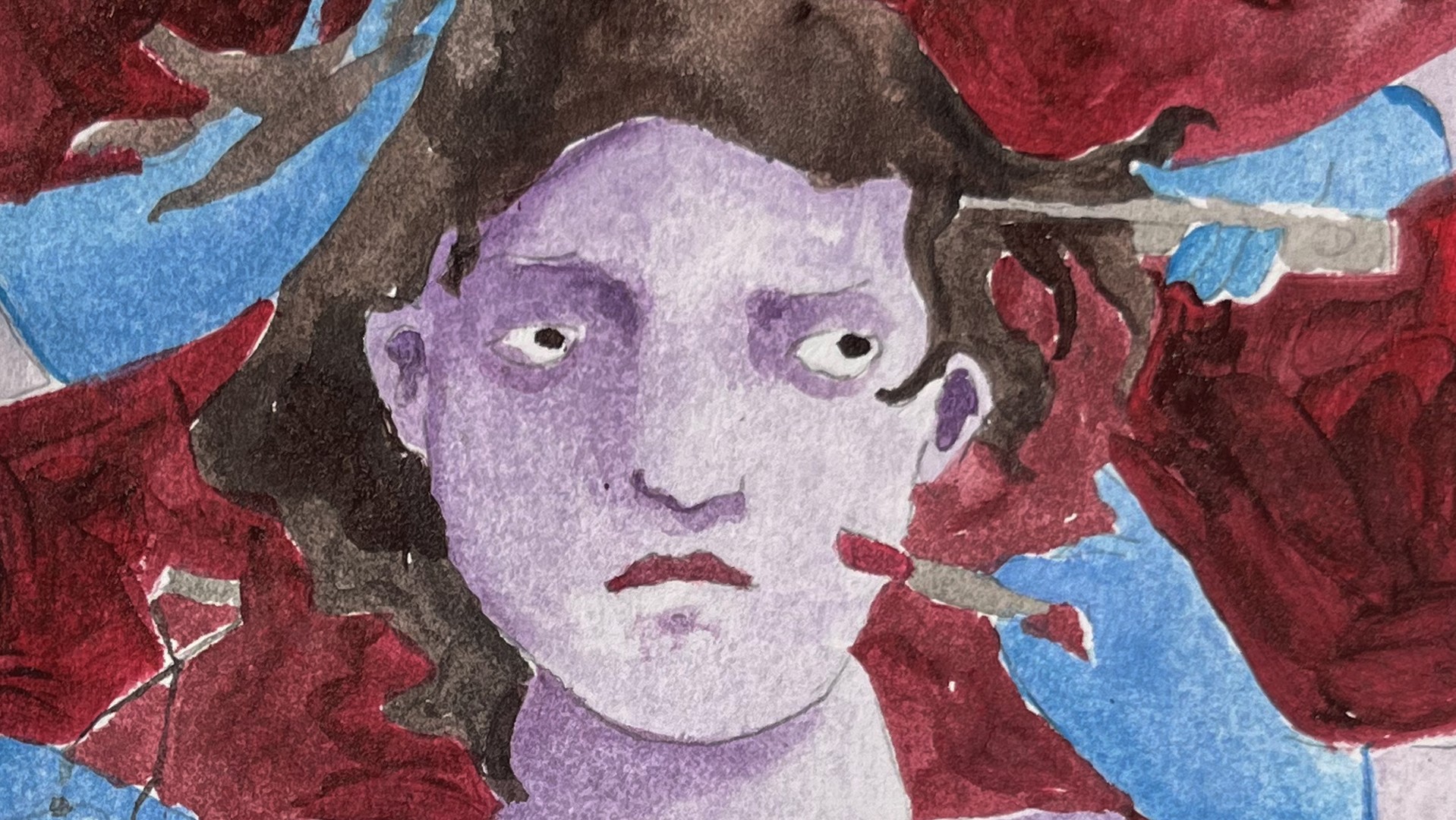
The Freedom to Be Ugly
No one explicitly told me that long hair was beautiful, but even as a child, I knew it was. My Barbies had it. Disney princesses had it. The American Girl dolls I coveted had it. So I had it too, even though it was a literal pain. “One must suffer to be beautiful,” my dad would quip when I yelped and jerked away from my mother pulling a comb through my always-tangled hair. Cutting it short would have been more practical. But I wanted to be beautiful—of course I did.Humans learn early what is attractive, and some people spend their life trying to achieve that standard. They watch as, in pursuit of a strong jawline and social-media fame, one young man repeatedly taps his face with a hammer, or as an already thin celebrity goes on a crash diet in order to fit into a famous dead woman’s dress for a few minutes. Americans pay for makeup and hair removal, blowouts and manicures, personal trainers and facials, botulinum toxins injected into muscles and synthetic hyaluronic acid to plump lips—collectively spending hundreds of billions of dollars a year to achieve the look they want, or at least the look they think they should have. This isn’t driven just by vanity: According to research, aesthetically pleasing people are generally more economically successful, and appearance-based discrimination incurs measurable economic costs. Beauty is historically tangled up with notions of morality, cleanliness, and fitness to lead. Being beautiful opens doors socially, too; a person’s actual qualities and abilities may be bolstered by what psychologists call an “attractiveness halo” effect, and such treatment can lead to beautiful people having a more optimistic outlook on life.Good looks and their benefits are widely known and openly discussed, but there’s far less talk about the experience of not being attractive. In 2022, the philosopher Thomas J. Spiegel wrote about the uncomfortable reality that discrimination based on looks is a kind of injustice, one with both psychological and