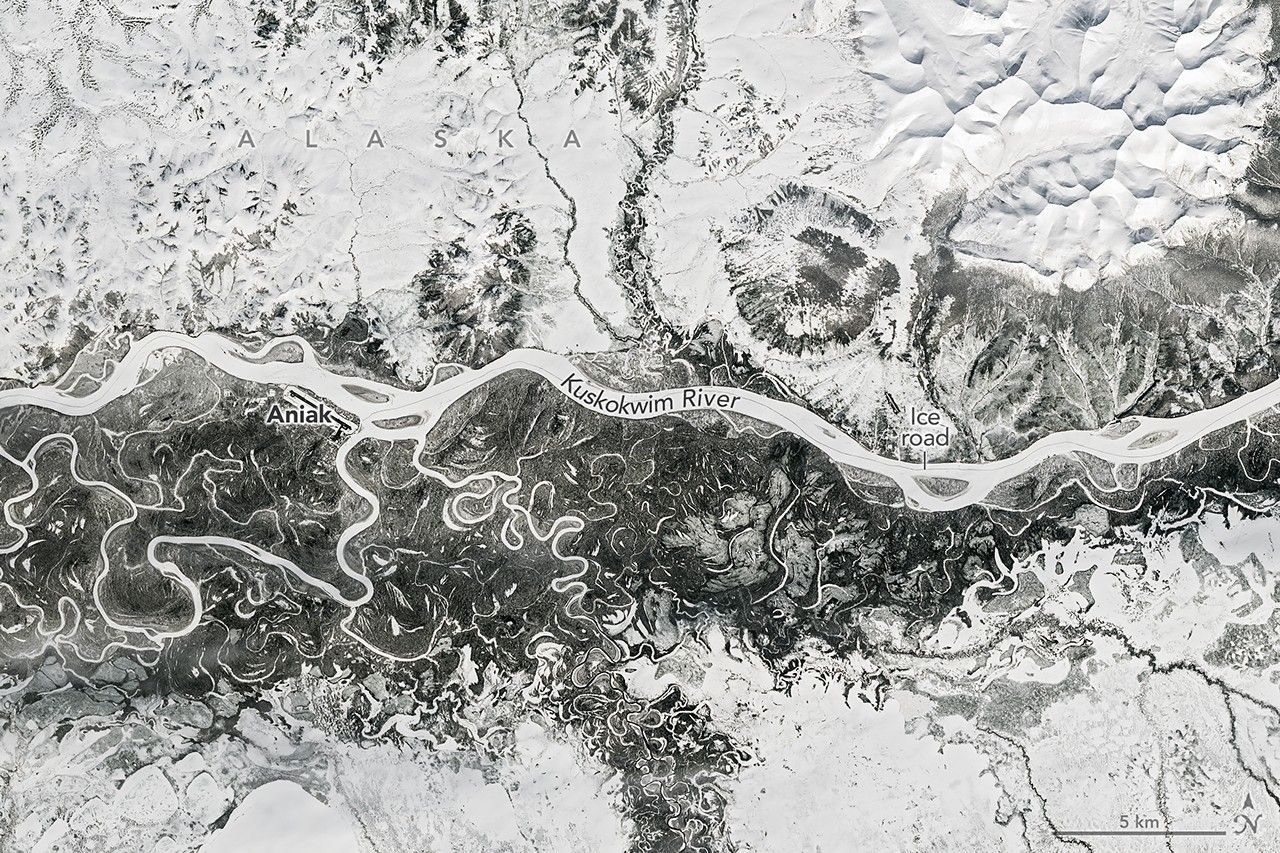
Ice Moves Out of Aniak
Why this matters: new research or scientific developments with potential real-world impact.
Earth Observatory Science Earth Observatory Ice Moves Out of Aniak Earth Earth Observatory Image of the Day EO Explorer Topics All Topics Atmosphere Land Heat & Radiation Life on Earth Human Dimensions Natural Events Oceans Remote Sensing Technology Snow & Ice Water More Content Collections Global Maps World of Change Articles Notes from the Field Blog Earth Matters Blog Blue Marble: Next Generation EO Kids Mission: Biomes About About Us Subscribe 🛜 RSS Contact Us Search April 21, 2026 May 7, 2026 A frozen river winds from east to west past Aniak, Alaska. Nearby meandering channels are also frozen, and much of the surrounding land is snow-covered. NASA Earth Observatory/Michala Garrison A river winds from east to west past Aniak, Alaska. Some stretches of the wide channel are still frozen over, while others contain broken-up ice. Most of the surrounding land is snow-free. NASA Earth Observatory/Michala Garrison April 21, 2026May 7, 2026 A frozen river winds from east to west past Aniak, Alaska. Nearby meandering channels are also frozen, and much of the surrounding land is snow-covered. NASA Earth Observatory/Michala Garrison A river winds from east to west past Aniak, Alaska. Some stretches of the wide channel are still frozen over, while others contain broken-up ice. Most of the surrounding land is snow-free. NASA Earth Observatory/Michala Garrison April 21, 2026 May 7, 2026 CurtainToggle2-Up Image Details The landscape along the Kuskokwim River near Aniak, Alaska, is frozen on April 21, 2026 (left), while spring melt and river ice breakup are evident on May 7, 2026 (right). Both images were acquired with the OLI (Operational Land Imager) on Landsat 9. NASA Earth Observatory images by Michala Garrison. Thawing may be a welcome sight for Alaskans following a remarkably cold winter and early spring in much of the state. But with melting comes the threat of rapid flooding in low-lying areas as river ice breaks up and periodically jams. The landscape along