A Field Guide To Learning
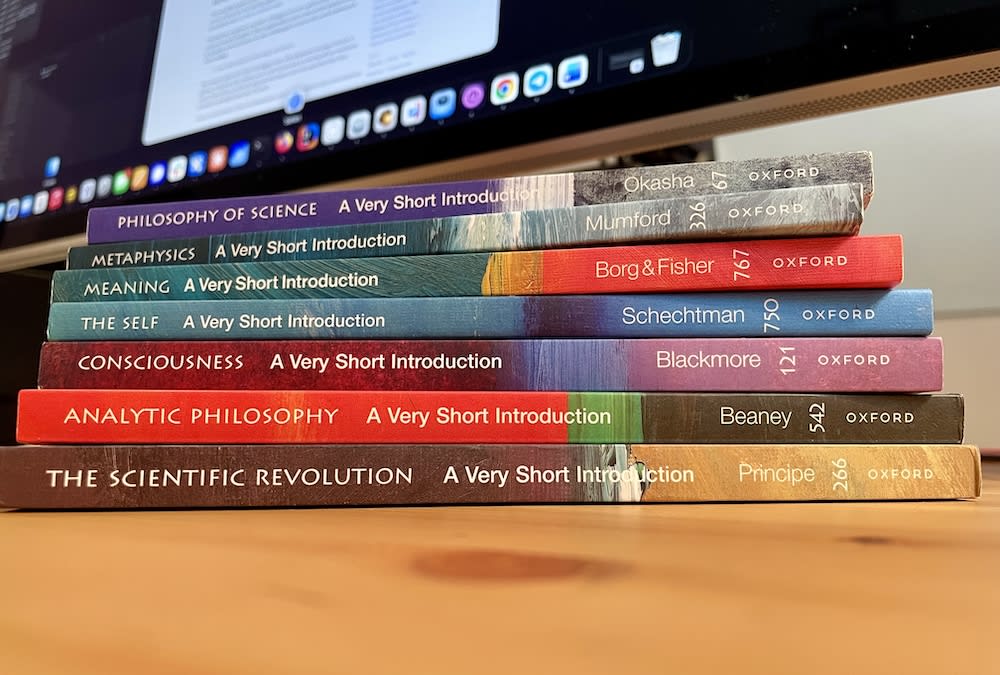
Let's say you're someone who wants to learn about an academic discipline. Perhaps advanced Physics, Sociology, Early-Modern History, or Cognition Science. Of course, there's You Tube pop-sci videos (which I love) and no shortage of products and services that purport to teach you the basics. But what do you do when you want to go beyond those basics?I'm not an expert, but I have been on a few of these journeys myself and so I want to lay out the paths I've taken and offer some advice to those who, like me starting out, had a very hazy view of the terrain and no idea who to trust with your education.Starting SimpleAs you can see, I like this series quite a bitFor anything vaguely academic in nature, I highly recommend trying out one of the books in the Very Short Introduction series.The books are, as expected, very short (~100 pages) and cover a quick survey of the topic at hand and its various sub-disciplines. They're approachable, quick to read, and the chapters are organized by discipline. At the end, there's not only a bibliography of sources, but a section dedicated to Further Reading.Search out directional guidanceThat section is a gold mine. One of the biggest issues with independent learning is the lack of guidance. It's hard to know whether you're on the typical track or venturing off into treacherous woods. These books are written by long-time field experts, and in my experience have been invaluable for getting the basic lay of the land.Journey into the depths of those recommendations, then if you're ready dive into actual courseware.Open CoursewareUniversities are still the gatekeepers of advanced knowledge, and they've graciously published a wide swath of excellent course materials. Universities like Stanford and MIT have made entire major tracks available to anyone with an internet connection. If you can find the syllabus: grab it. Buy (or rent) the books, read them, and take notes. These topics are difficult, and they take time to learn.💡 Tips for Findin