A Putin Satire That Somehow Works
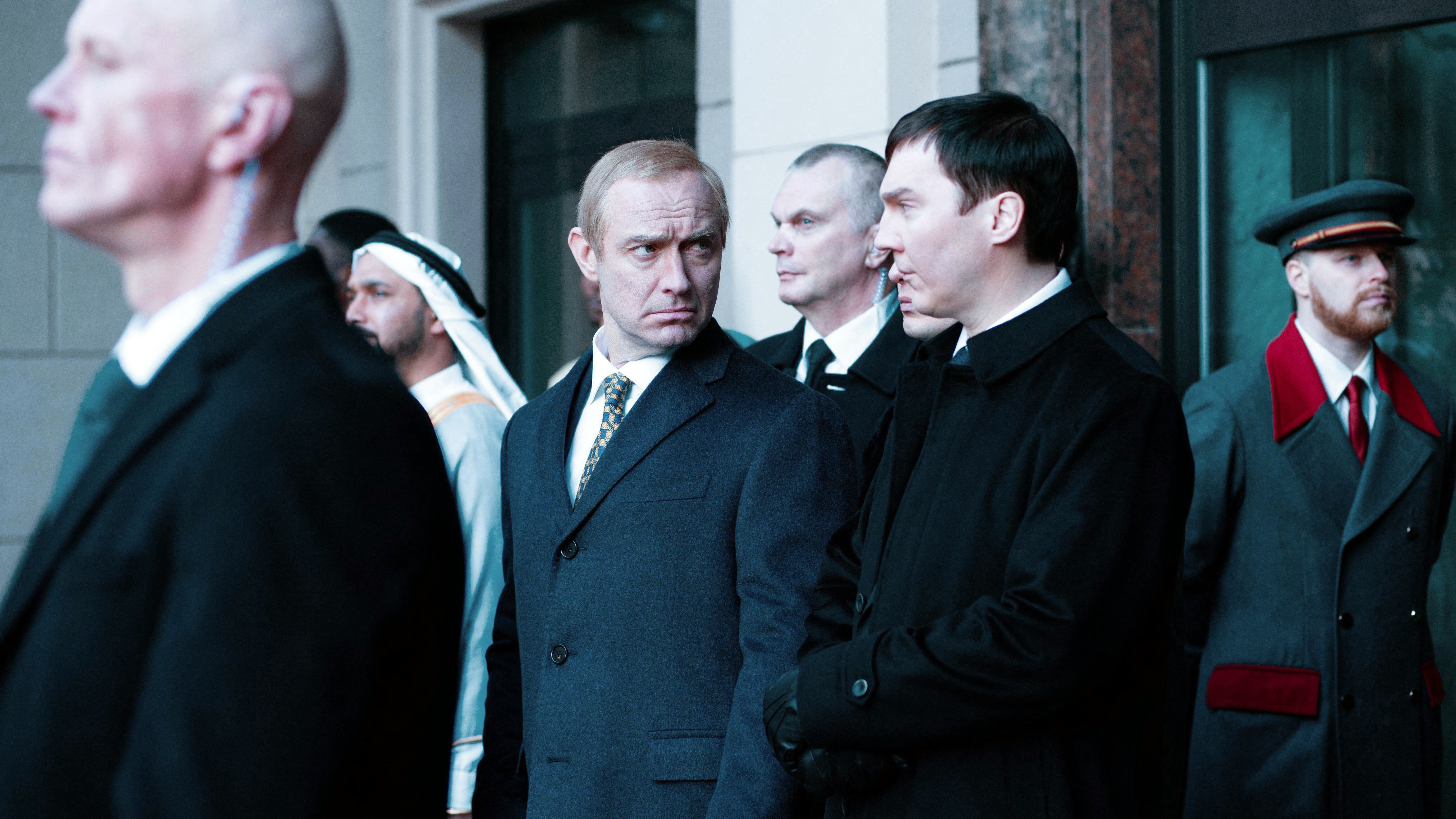
Vladimir Putin does not appear for the first 45 minutes of The Wizard of the Kremlin, an odd choice for a satirical film entirely about him. His presence looms in the background—the future Russian premier is jokingly referred to as “the Tsar” by the narrators—yet the director, Olivier Assayas, seems more interested in explaining the strange country Putin inherited, at least initially. Keeping Putin off-screen for a while makes perfect storytelling sense: The film, an adaptation of a 2022 novel of the same name, aims to understand how post-Soviet Russia’s brief cosmopolitan boom in the 1990s was eventually quashed under Putin’s rule, so it spends time illustrating what will be lost. But that means the movie’s most effective element remains locked away for far too long.Jude Law plays Putin in an extraordinary performance; wearing a near-permanent grimace and barely ever raising his voice, he’s a nonetheless transfixing screen presence. Yet The Wizard of the Kremlin’s titular role refers not to him, but to Vadim Baranov (played by Paul Dano). Inspired by Putin’s former aide Vladislav Surkov, Baranov experiences a similar rise and fall over a 30-year period, up to the present day; he develops from an energetic young artist into a political kingmaker and, eventually, an outcast. The movie’s weakness, however, is that it’s focused on Putin’s unknowability—yet he’s accessible only through Baranov, who is far less engaging.The script, co-written by Assayas and the French novelist Emmanuel Carrère, is a series of nesting flashbacks initially told through the eyes of Rowland (Jeffrey Wright), a writer in search of the now-exiled Baranov. Rowland is summoned to Baranov’s dacha to hear his life story, and Dano takes over the narration duties to lay out the final months of Soviet Russia; the emergence and downfall of Putin’s presidential predecessor, Boris Yeltsin; and Baranov’s machinations as a TV executive turned government adviser. Dano brings an intentional flatness to his