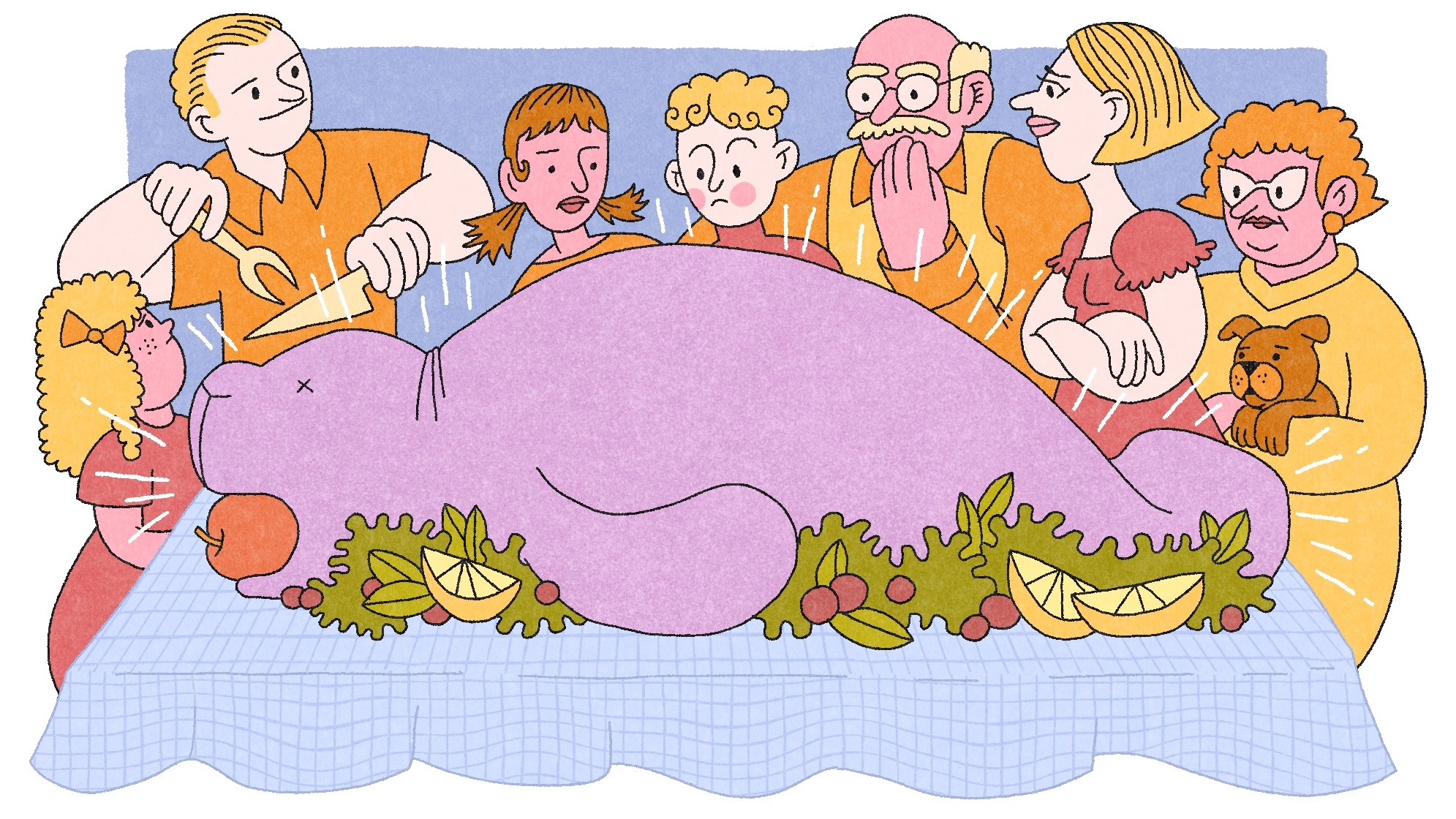
The Original ‘Meatfluencers’ Had Some Strange Ideas
If there’s one message that Robert F. Kennedy Jr.’s campaign to redefine healthy eating has imparted, it’s that Americans need to eat their beef. In January, the health secretary rolled out the new food pyramid—with a marbled rib eye in the pole position. Weeks later, Kennedy modeled good beef-eating behavior, posing for a pic on his 72nd birthday while tucking in to a bone-in steak decked out with candles. In February, he dropped by the trade show Cattle Con and begged the assembled ranchers to increase the size of their herds. “I eat beef every day, twice a day,” Kennedy boasted to the hooting crowd.The secretary’s beef-intensive diet, which is shared by other members of the Cabinet, including Vice President Vance, is informed by the idea that people should be eating as our prehistoric ancestors did. When the Department of Health and Human Services put out its update to the food pyramid, it also published a 90-page document laying out the “scientific foundation” for the new advice. The report cited several papers on the benefits of the Paleo diet. One specifically endorses eating wild game, and argues that every person should strive to change their diet to “become a 21st-century hunter-gatherer.”This mode of thinking can be traced back to at least the 19th century, but its current incarnation—the version that has wormed its way inside the U.S. government—dates to the 1970s, when the growing plague of heart disease and obesity was starting to receive sustained attention on Capitol Hill. That’s also when a Seattle gastroenterologist named Walter Voegtlin published a pale volume with a drawing of a loincloth-wearing hominid on the cover. His book was called The Stone Age Diet, and on the title page was a modest proclamation: “It’s Safe, It’s Sane, It’s Simple, and It Really Works!”Voegtlin’s approach to nutrition may not have been any of those things, but it set the model for the glut of Paleo-diet books that were to come. The book laid out its author’s odd ideas and