Why is it so unusually expensive to replace lead pipes in Chicago?
Why this matters: environmental and climate reporting with long-term consequences.
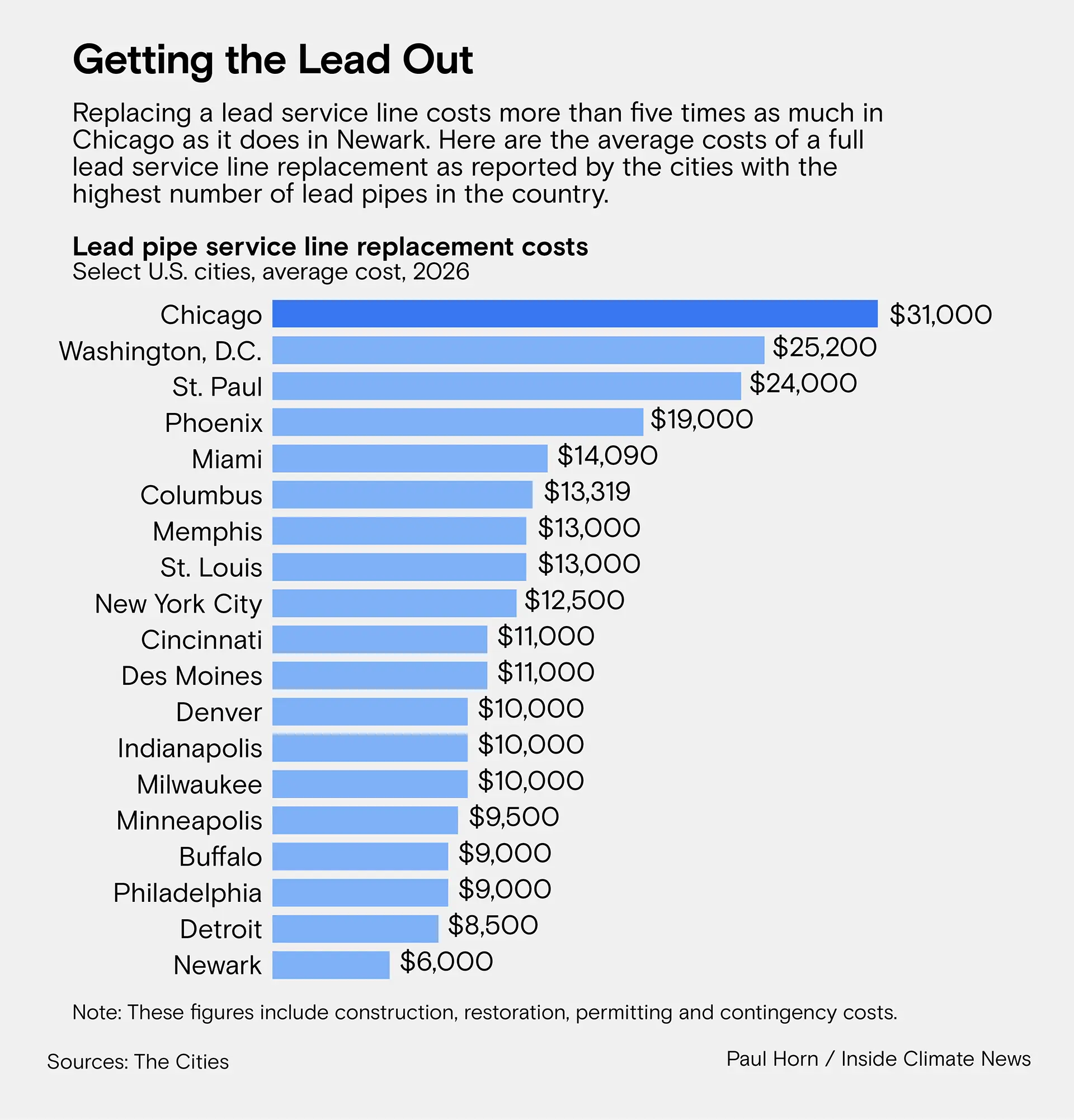
No city dealing with a lot of lead pipes spends as much as Chicago does to replace them. With more than 400,000 lead water service lines, Chicago has the largest known inventory of lead pipes of any city in the country. Officials say replacing each one costs about $31,000 on average — more than six times the Environmental Protection Agency’s national estimate of $4,700 a line. Grist, WBEZ, and Inside Climate News surveyed other cities with the most lead service lines in the country — including Detroit, Milwaukee, and New York — about the cost of fully replacing a lead service line. The 18 that responded provided averages between $6,000 and $25,000, with most less than half of Chicago’s figure. Engineering firm CDM Smith, which works with cities across the country, pegs the national average at $12,500 per line. Now, with a federal mandate to remove every lead pipe within roughly 20 years, Chicago is facing a daunting timeline and an astronomical price tag. Replacing the city’s inventory at the current rate will cost more than $12 billion. “It is absurd,” said Cyndi Roper, a senior policy advocate with the Natural Resources Defense Council’s safe water initiative. “You can’t play victim to your own policies. … You actually can make changes to bring the cost down.” A review over seven months of hundreds of pages of program documents and contracts, plus dozens of interviews with city officials, policy experts, contractors, and homeowners, found several key contributors. The most significant include inefficient early contracts, cumbersome permitting requirements, and the city’s reliance on one-off replacements rather than undertaking whole blocks at once. A glaring lack of clarity from the Department of Water Management, which oversees the city’s replacement program, has also made it difficult to pinpoint the exact reasons for the high cost. Its officials were unable to provide Grist, WBEZ, and Inside Climate News with consistent figures for replacement costs and the num