Media reaction: How climate change intensified Europe’s record-breaking June heat
Why this matters: environmental and climate reporting with long-term consequences.
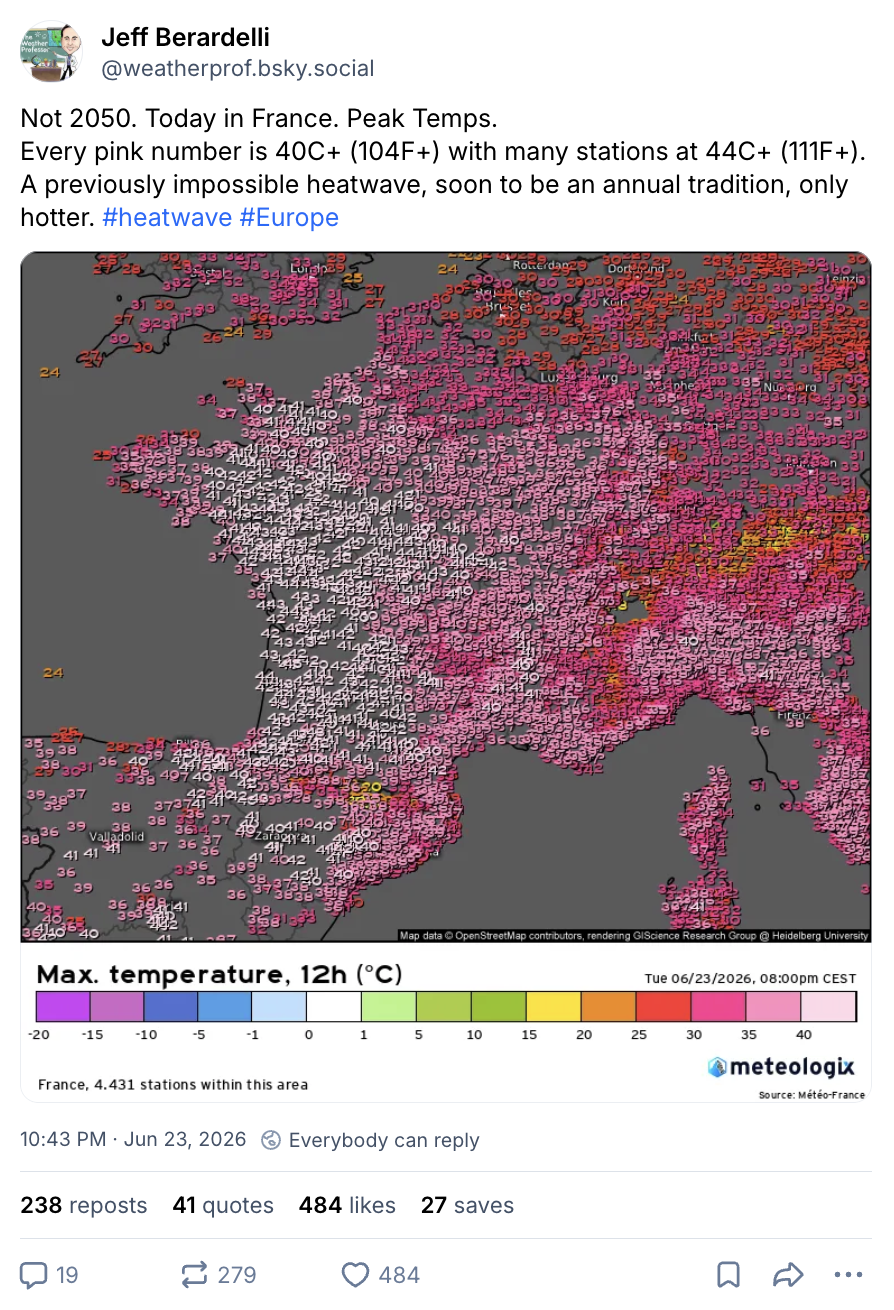
For the second time in two months, western and central Europe has been hit by a record-breaking heatwave. Temperature records have toppled in multiple countries, with France seeing its “hottest day ever” for two days running and the UK, Spain and Switzerland breaking records for June. A rapid-response attribution study has concluded that “climate change is unequivocally to blame”, noting that the scorching temperatures would have been “virtually impossible” 50 years ago. The research also found that the sweltering overnight temperatures seen this week are “100 times” more likely today than they were in 2003 when Europe was hit by a deadly summer heatwave. The extreme conditions come on the 50th anniversary of a historic 1976 heatwave in the UK, prompting many comparisons of the two events from scientists and the media. In this article, Carbon Brief looks at how the heatwave developed and the role climate change played. How did the heatwave develop? What have the impacts been so far? France UK Rest of Europe What role has climate change played? How does the UK heatwave compare to 1976? How has the media responded? Why has media coverage been criticised? How did the heatwave develop? The “very intense and widespread” heat began to develop in the south of France as early as 13 June, reported Le Monde, before it began to “intensify and move northward” in the following days. The heatwave was caused by a phenomenon known as an “omega block”, which is a “rare weather pattern” that can trap intense heat over a particular area “for extended periods”, said the Independent. The Daily Telegraph explained the pattern’s development as a four-step process. First, it said, the jet stream moves across the Atlantic Ocean, creating a high pressure ridge to the south. The “omega” shape is created by low pressure systems on either side of the meander. This “stalls” the normal flow of weather systems from west to east and “pulls hot air from Africa northward over Europe”, creating a “lid