Pakistan assails 17 Indian projects on Indus waterways, calls them ‘tools for hydro-hegemony’
Why this matters: local context for readers following news across Pakistan and the region.
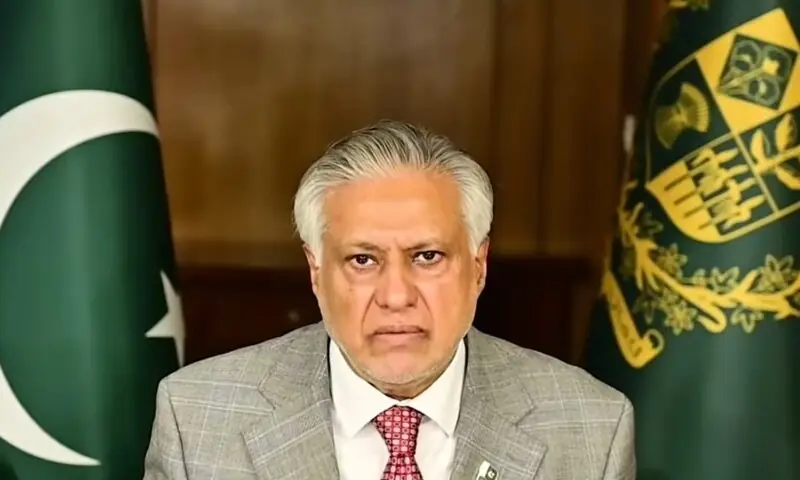
Deputy Prime Minister and Foreign Minister Ishaq Dar said on Thursday that at least 17 projects by India on waterways part of the Indus River System would give New Delhi the “tools for hydro-hegemony”. Dar’s statement has come at a time when water and the Indus Waters Treaty remain a contentious issue between India and Pakistan, following New Delhi’s unilateral abeyance of the accord last year — a move that followed a brief military conflict between the two sides in May 2025. More recently, Indian Water Minister CR Patil said his country was working to ensure “not a single drop of water” would flow into Pakistan. Meanwhile, Pakistan has maintained that any attempt to change the flow of cross-border waterways would be considered an “act of war”. It was against this backdrop that Dar’s keynote address, touching upon the matter, was played at a seminar titled “Transboundary Water Resources: A Weaponised Global Common”. The seminar was jointly organised by Pakistan’s embassy in Brussels and the Centre for European Policy Studies. Dar began his address by highlighting that shared resources required cooperative management through agreed frameworks. “Otherwise, competing interests can turn them into sources of conflict and weaponisation,” he said. The deputy prime minister quoted the United Nations’ former secretary general, Kofi Annan, as saying, “Fierce national competition over water resources has prompted fears that water issues contain the seeds of violent conflict, but the water crises we face are more often crises of management and governance rather than absolute scarcity. Shared waters can be a pathway to peace and regional integration rather than a catalyst for war.” He said, “The very fact that we need to have this discussion in this day and age is, in itself, dismaying”. “It serves as a reminder that peaceful coexistence cannot be taken for granted, must be sustained through respect for the treaties, agreements, and multilateral frameworks that enable states to