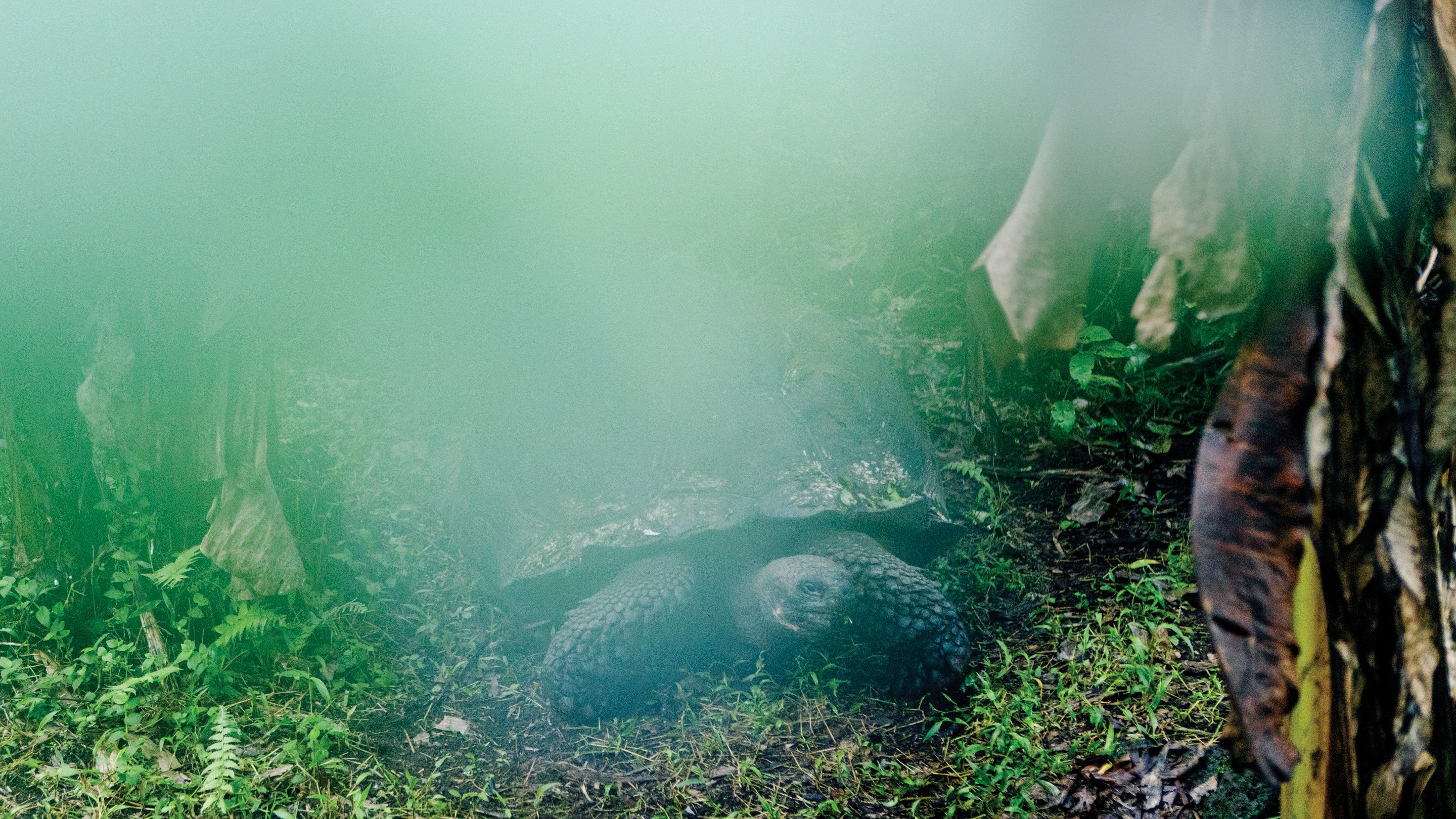
Darwin’s Story Isn’t as Simple as It Seems
This is an edition of the Books Briefing, our editors’ weekly guide to the best in books. Sign up for it here.This week, I learned that Charles Darwin didn’t exactly come up with the theory of evolution by cataloging the finches of the Galápagos Islands. Contrary to the simplified version I’d grown up believing, Darwin spent only a few weeks in the islands that he mentioned in his world-changing book, On the Origin of Species, and he wasn’t labeling his specimens with enough precision to really prove that they exhibited subtle differences based on which island they came from. I found out the complicated truth about Darwin’s journey aboard the H.M.S. Beagle by reading Helen Lewis’s dispatch from the archipelago, recently published in The Atlantic as the latest entry in our series “The Writer’s Way.”After some reflection, I’m not surprised that the research that brought evolution to light in the 19th century wasn’t as straightforward as I’d thought it was. It reminds me of the first time I realized how the famous Scopes “monkey trial” came to pass in Dayton, Tennessee. While growing up in the state, I’d assumed that the 1925 showdown between the firebrand lawyer Clarence Darrow and the pious William Jennings Bryan had resulted from some government raid on the classroom of the unsuspecting teacher John T. Scopes. In reality, Scopes had volunteered to be a test case after the American Civil Liberties Union made clear its intent to challenge Tennessee’s ban on teaching evolution in state-funded schools. What set me straight in that instance was Brenda Wineapple’s 2024 book, Keeping the Faith.Darwin, the man who set the stage for the scientific revolution that would lead to the Scopes trial, was no less deliberate in his work than Darrow was. A serious thinker and, as Lewis writes, “above all an empiricist,” he didn’t just stumble into a eureka moment—any more than Isaac Newton simply got hit in the head by an apple. And like the vainglorious Darrow, he was an imperfect m