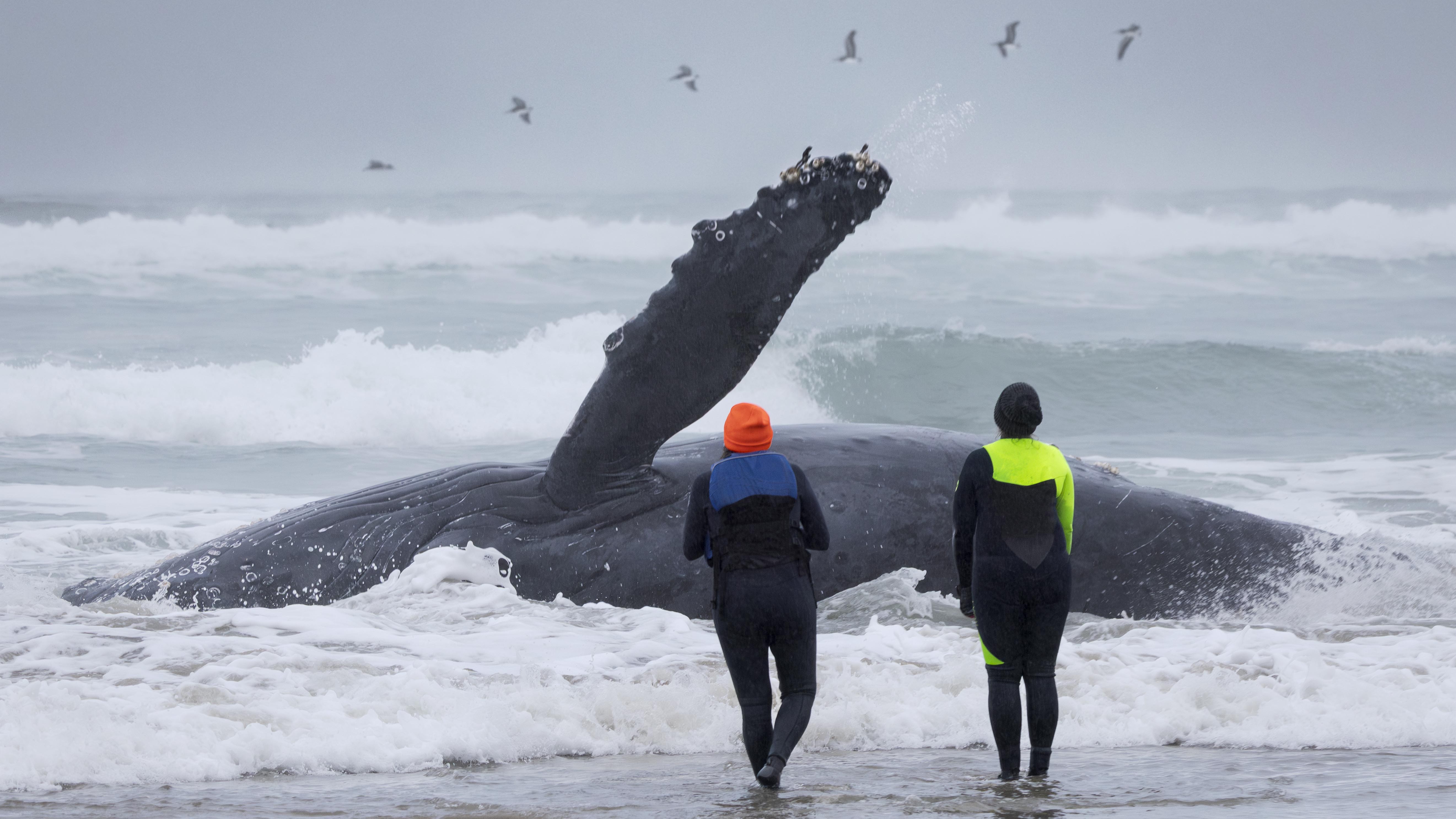
The Fight to Save the Yachats Whale
One afternoon in November, just north of the small Oregon coastal town of Yachats, a juvenile humpback whale tumbled ashore. A few hours earlier, local residents had spotted it thrashing in distress half a mile out at sea, entangled in crabbing gear, with a rope bound around its pectoral fin and woven through its baleen. One resident had swum out and cut the whale free, but it didn’t turn itself around and was now lodged on sand in shallow surf. A few people gathered on the beach and called for help. It finally arrived, in the form of two representatives from the Oregon Marine Mammal Stranding Network, a collection of volunteer scientists and advocates based some 20 miles up the coast in Newport. The experts said that given the impending darkness, incoming tide, rough surf, and heavy fog, they couldn’t even assess the whale’s condition until morning.The onlookers scattered—all but one, a local named Amy Parker. She stayed long after sunset, listening to the whale’s haunting, high-pitched cry, a sound so plaintive and elemental that it cut through the roaring surf. The whale wanted help; you didn’t need a degree to interpret those sounds. And Parker, a longtime coast dweller, figured that the night’s high tide offered the whale its best—and possibly only—chance of escape. She took out her phone and snapped some grainy images of the 26-foot-long animal that appeared to rise, ghostlike, out of the misty sea, and posted them to a Facebook community page. “He’s alive he’s crying out and if nobody comes to help him, he’s not gonna survive the night,” she wrote.My father has a house in Yachats, so I watched on social media as Parker’s plea took on a life of its own. Locals joined her on the beach and started posting their own photos, updates, and requests for more assistance. Then people started driving in from cities near and far: Eugene, Salem, Corvallis, Redmond. Soon my Facebook feed was awash in whale posts, whale videos, and whale-related news reports. Hundreds of id