Hey Chat, Make Me a Fake ID
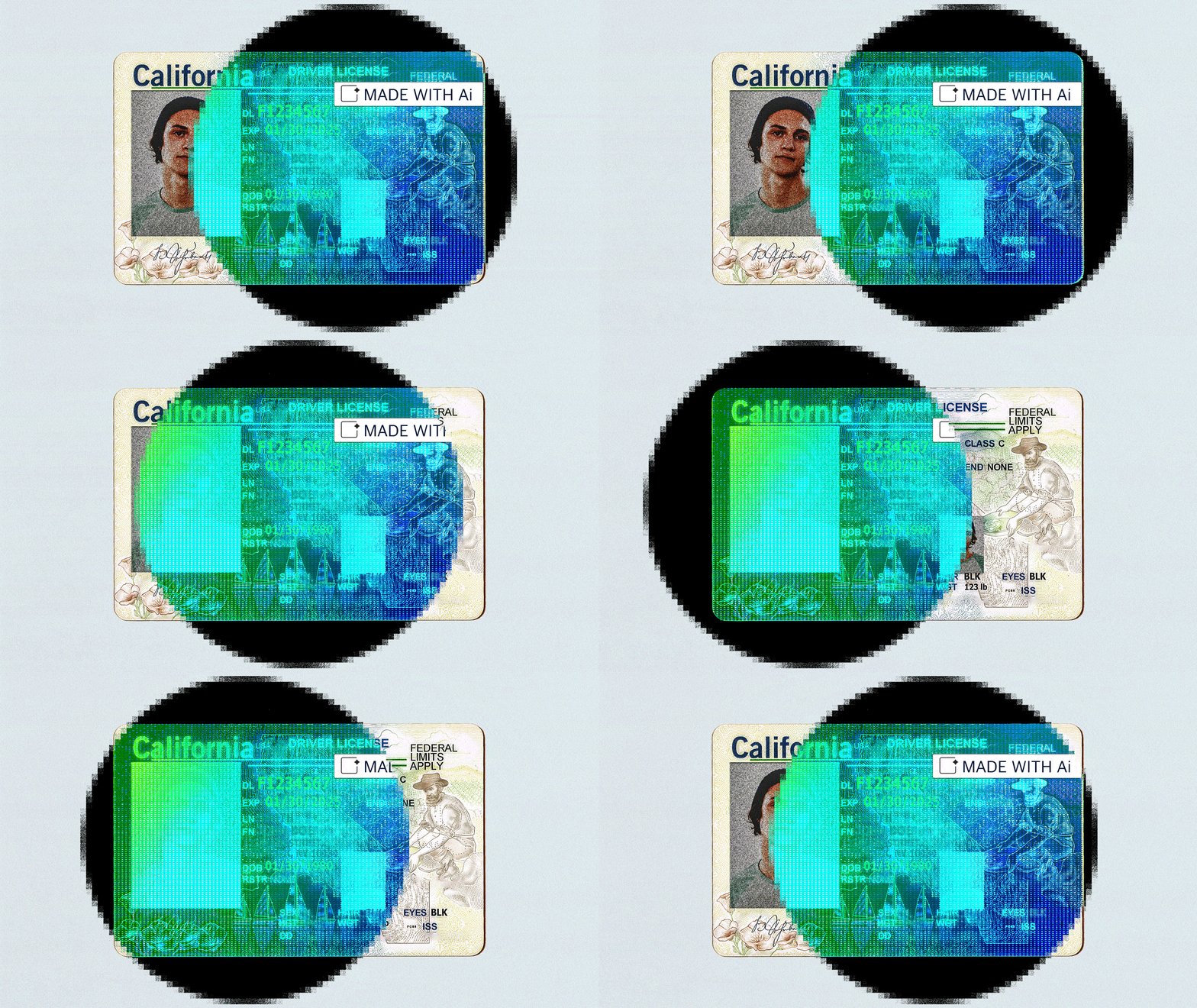
Donald Trump is on Tik Tok doing his morning routine. “Get ready with me for a big day 💄🇺🇸,” reads the caption, as the president holds a makeup brush to his cheek. The scene is a still, ostensibly a screenshot of a Tik Tok clip. Like so much other AI-generated slop coursing through the internet, the image is fake and ridiculous. It also looks unnervingly real: There are no hands with six fingers, physics-defying angles, or other flagrant signs of AI-generated imagery. At quick glance, it really looks like the president is putting on bronzer.Created in ChatGPT with the prompt “Trump doing a makeup tutorial on TikTok”I made this deepfake with OpenAI’s new image-generation model. ChatGPT Images 2.0, released last week, can create photorealistic visuals that are noticeably more convincing than what its predecessors might have produced. The tool has flooded the internet with hyperreal fakes: for example, Jeffrey Epstein as a Twitch streamer. I created the “screenshot” of Trump’s fake TikTok after encountering a similar image on the ChatGPT subreddit, and I’ve since been able to use Images 2.0 to create all kinds of alarming deepfake images—including of Elon Musk getting whisked away by the FBI, world leaders suffering medical emergencies, and top American politicians donning Nazi paraphernalia (none of which I’ve shared anywhere).This was all unsettling in its own right. But the most realistic deepfakes I was able to create did not involve politicians or celebrities. They mostly did not depict people at all. With little effort, I was able to create more than 100 fraudulent images, including prescriptions for opioids and ADHD medication, bank alerts, social-media posts, fake IDs, and passports.A sample license from the Washington, D.C., DMV website. A fake license created by editing the sample image using ChatGPT.Images 2.0 is especially good at generating images with text in them—which may not sound impressive, but it’s a big deal. Image models have long struggled to pr