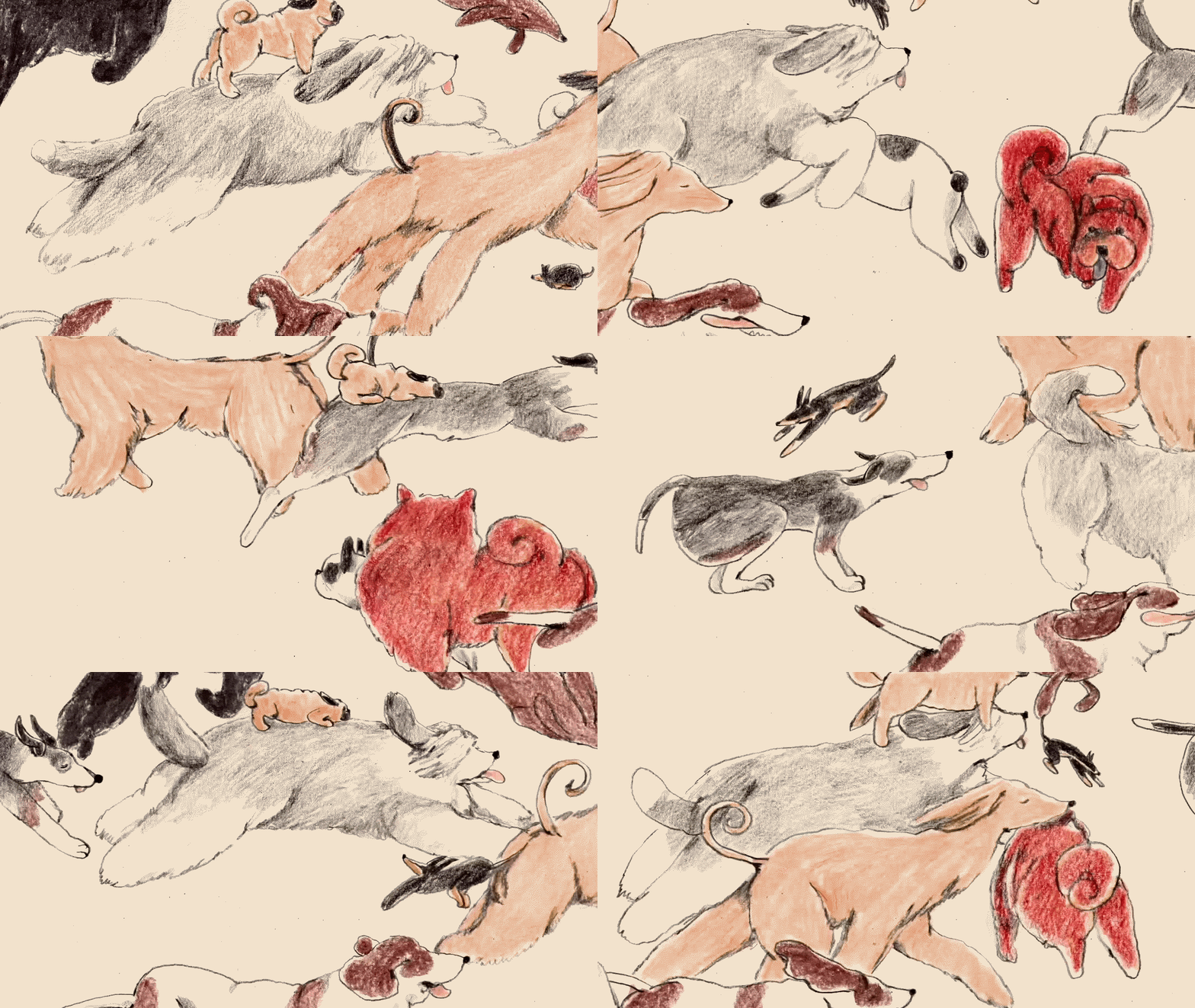
Your Next Dog May Live Longer
One day last November, my dog, Forrest, sat on the cold marble steps of the Smithsonian’s natural-history museum in Washington, D.C., ready to meet Celine Halioua, a woman who may one day add a tail-wagging year or so to his life, and also the lives of millions of other dogs. In 2019, Halioua founded a company called Loyal, and in February 2025, a pill that she developed for dogs was deemed likely to be effective by the FDA. If the company ticks a few remaining boxes, the drug could soon be on sale, kick-starting a new era of longevity medicine that could eventually also lengthen humans’ lives. More than 10,000 years ago, dogs made a farseeing bet on humans. They padded carefully up to our campfires, ate scraps, and kept watch, hitching their fates to a species that would soon bestride the planet. They have since become the fourth-most-populous large land mammal, trailing only sheep, cows, and goats, which all lead less pampered lives. Now we’re trying to keep our best animal friends around longer too.If only I could have explained all of this to Forrest before our walk with Halioua. As a Portuguese water dog, he hails from a clever breed, but he doesn’t understand advanced pharmacology, so I worried that he might be indifferent to her, or even rude. But Halioua, who is 31, had arrived with a plan. She stooped down, squealed his name, and opened her hand, revealing a treat that he promptly devoured.Halioua was 18 years old when the cold fact of death blew through her. She was working at a neuro-oncology lab and couldn’t unsee the cosmic unfairness of a brain-cancer diagnosis, the way it constricted the possibilities of a person’s life and cut short their closest relationships. Death had an important role to play back when life was single-celled and simple, Halioua told me. It helped evolution iterate rapidly and build up more complicated organisms. But now that natural selection has created complex, intelligent animals—namely, us—we should stretch out the good, heal