Q&A: Can China turn hydrogen into its next clean-energy industry?
Why this matters: environmental and climate reporting with long-term consequences.
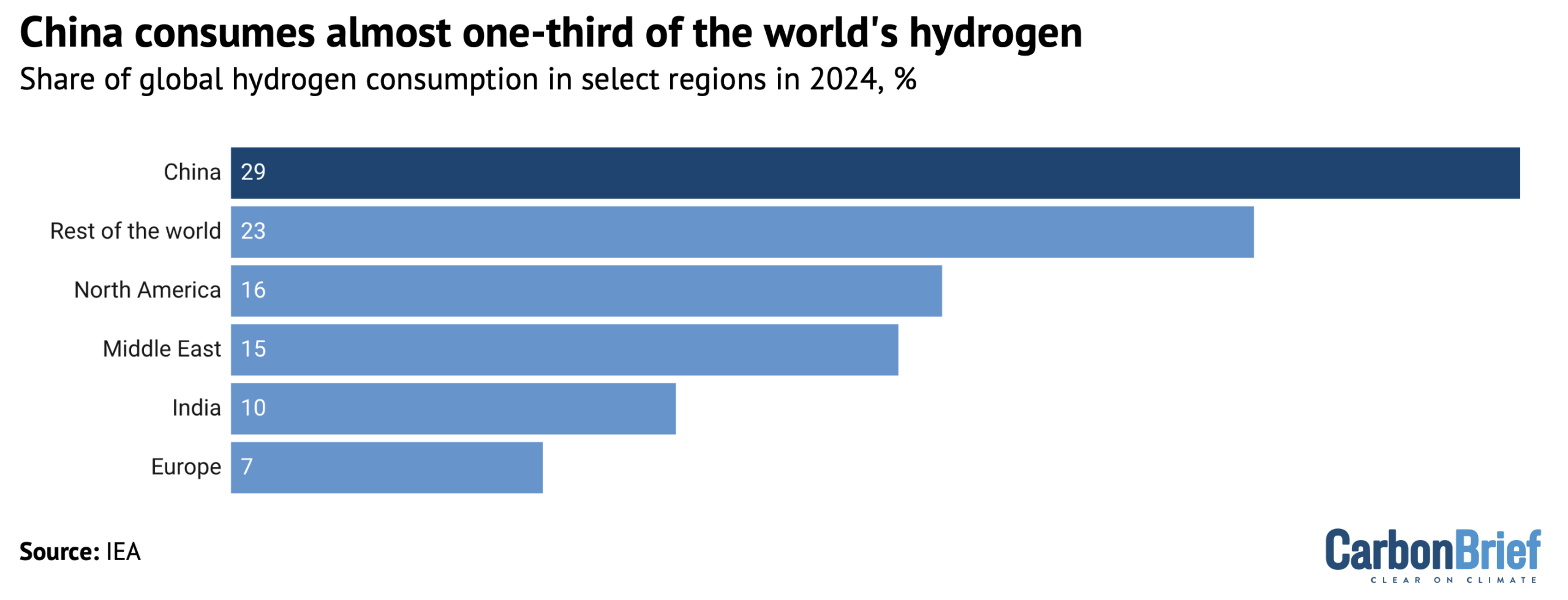
China has said that hydrogen is a key “future industry”, important to both its energy transition and its industrial policy. Hydrogen frequently goes through hype cycles, most recently driven by rising oil and gas prices due to the conflict in the Middle East. Yet, even in China, the world’s largest producer and consumer of the fuel, hydrogen remains expensive and inefficient to produce. This is especially the case for “green” hydrogen derived from renewables. Moreover, there is limited supporting infrastructure and there is little incentive to use hydrogen over other energy sources. As a result, uptake in China of hydrogen as an alternative fuel remains low. Nevertheless, these challenges echo the early circumstances of another key clean-energy technology – electric vehicles (EVs). In China, EVs benefited from a policy environment that included consistent signals of support, financial aid and the development of supporting infrastructure. Many similar policies are now being deployed – and in some cases improved upon – to support the development of China’s hydrogen industry. This article examines China’s approach to developing hydrogen and how its evolving industrial policy could make the fuel viable. How is China using hydrogen and where does it come from? Electrification and rising installations of solar and wind power have been the biggest drivers of China’s decarbonisation story so far. However, how China will address the more energy-intensive, hard-to-electrify segments of its economy remains an open question. Hydrogen is seen by some in China as a potential solution for reducing emissions in a range of “hard-to-abate” industries, from steel and chemicals to aviation and shipping. The country is the world’s foremost producer and consumer of hydrogen. It produced 36.5m tonnes of the gas in 2024, with maximum production capacity standing at 50m tonnes that year. It also consumed nearly a third of the world’s hydrogen in 2024, as shown below. Share of global hydroge