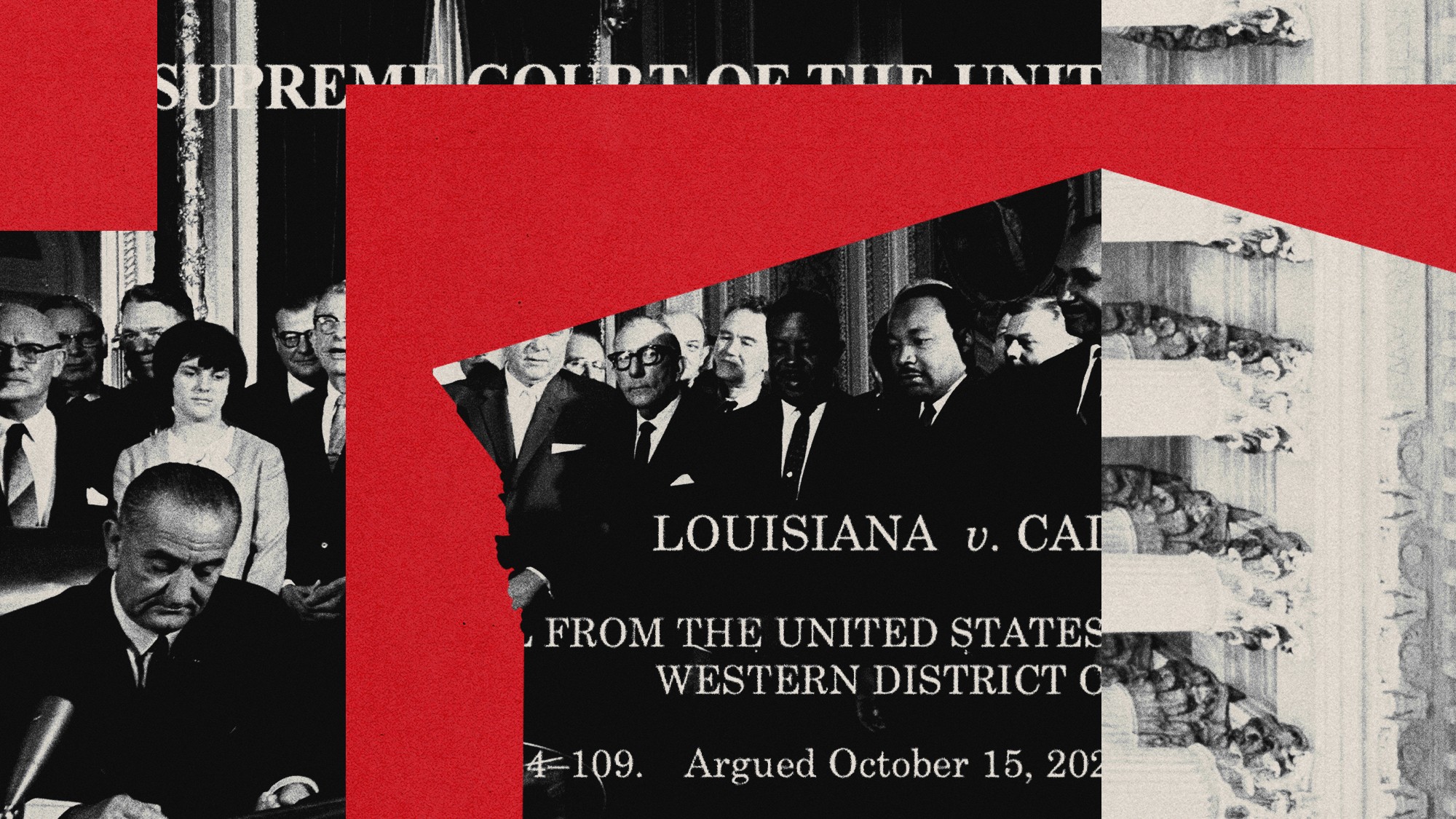
A Requiem for the Voting Rights Act
The best things shine bright, but never long. So it was for the Voting Rights Act, the 1965 legislation that protected Black suffrage by neutralizing voter suppression in southern states, and became the foundation for equal ballot access for all Americans. Of the 250 years since the country’s founding, less than a quarter unfolded under the aegis of universal suffrage. Color television, credit cards, and Barbie dolls arrived earlier than the VRA and will survive longer. The reign of Queen Elizabeth II lasted a decade longer than the guarantor of democracy in America.On Wednesday morning, the Supreme Court’s conservative majority completed its 13-year campaign against the law. In Louisiana v. Callais, the Court limited the use of race in drawing congressional reapportionment plans and the ability of minority groups to challenge potentially discriminatory maps. Writing for the majority, Justice Samuel Alito declared that the only permissible consideration of race in creating new districts is when “present-day intentional racial discrimination regarding voting” can be proved. In doing so, he rejected any practical attempt to remedy past and present racism in redistricting plans.In the South, voting is intensely polarized along racial lines: White voters generally support the opponents of whomever Black voters support. Gerrymanders that discriminate against Black voters could be justified today as merely offering partisan advantage to Republicans. These and a whole suite of other facially race-neutral changes to voting procedures could be used in southern states to hamper Black representation. The VRA and subsequent case law acknowledged this problem, and recognized that the only practical remedies would have to factor in race.[Adam Serwer: Voters can be disenfranchised now]Like previous VRA-related decisions, Callais was “narrow,” in that it did not strike down the law itself. But although the edifice built at great expense—by Fannie Lou Hamer, by John Lewis, by the bl